· Business Growth & Workspace · 6 min read
Navigating 2026 Workspace Pricing Strategies for Indian Businesses
Global coworking shifts like rising SaaS costs and asset-light models are shaping India's market. Learn the strategic pivot for 2026 workspace pricing strategies to grow your business.

TL;DR: The 2026 flexible workspace market is pivoting due to global cost pressures. For Indian businesses, this means smarter workspace pricing strategies 2026, a focus on asset-light models, and bundled digital tools. Adapting to these trends is key to controlling overhead and scaling efficiently in a competitive landscape.
Introduction
For the modern Indian founder or branch manager, the primary challenge is scaling a business amidst rising operational complexity. Traditional office leases in cities like Chennai lock you into multi-year commitments, high capital expenditure, and management overhead. Meanwhile, the demand for flexibility from top talent and the need to manage flexible office inflation impact is more acute than ever. The global flex space market, projected to hit $30.12 billion by 2026, is undergoing a strategic shift driven by cost recalibration and digital bundling. This shift directly influences the value proposition available to Indian SMEs. Understanding this evolution is not about following a trend; it’s about accessing a more strategic, growth-oriented operational model that sidesteps traditional liabilities.
What are 2026 Workspace Pricing Strategies?
Workspace pricing strategies for 2026 represent the operational pivot by flexible workspace providers in response to a dual squeeze: rising digital infrastructure costs and evolving tax/regulatory landscapes. It moves beyond simple per-desk/month pricing to integrated models. These strategies bundle ‘utility-grade’ digital tools, prioritise asset-light expansions to mitigate risk, and create ancillary revenue streams through value-added services. The core aim is to offer businesses predictable, scalable cost structures that insulate them from direct exposure to inflationary pressures on software and real estate.
How Global Inflation is Reshaping Your Office Costs
Global inflationary pressures are not abstract; they directly impact the cost of doing business in India. The late 2025/early 2026 price hikes of 16-22% from major software providers for AI-bundled services mean the digital tools your team relies on are getting more expensive. For workspace operators, this has led to the introduction of ‘Digital Worksuite’ fees. Simultaneously, persistent core inflation is pushing operators globally to incentivise longer commitments, with ‘Price Lock’ annual contracts offering 5-10% discounts. For your business, this underscores the importance of securing predictable operational costs.
A traditional lease exposes you directly to every utility spike and software renewal. A modern flexible model, by contrast, can offer a consolidated, often fixed-cost package that includes these digital essentials. This provides a hedge against the flexible office inflation impact that you would otherwise manage alone.
Crizone Pro Tip: When evaluating a workspace, ask for a detailed breakdown of what’s included in the monthly fee. In 2026, premium internet, cybersecurity software, and collaboration platform licenses should be considered ‘the basics’, not luxuries.
[Image of Financial Pressure Diagram] A flowchart showing ‘Global SaaS Cost Inflation’ and ‘Local Real Estate Volatility’ converging on a ‘Traditional Business’, versus a ‘Flex Space Provider’ absorbing and distributing these costs across a portfolio to offer the business a ‘Stable, Predictable Membership Fee’.
The Rise of Asset-Light Models and Focused Amenities
The coworking business model innovation for 2026 is decisively shifting towards asset-light management partnerships, expected to dominate over 70% of new expansions. This means operators manage spaces owned by others, avoiding heavy balance sheet liabilities. For you, this translates to more sustainable provider partners and a wider, more strategically located network of spaces without the operator’s financial strain being passed down as sudden price hikes.
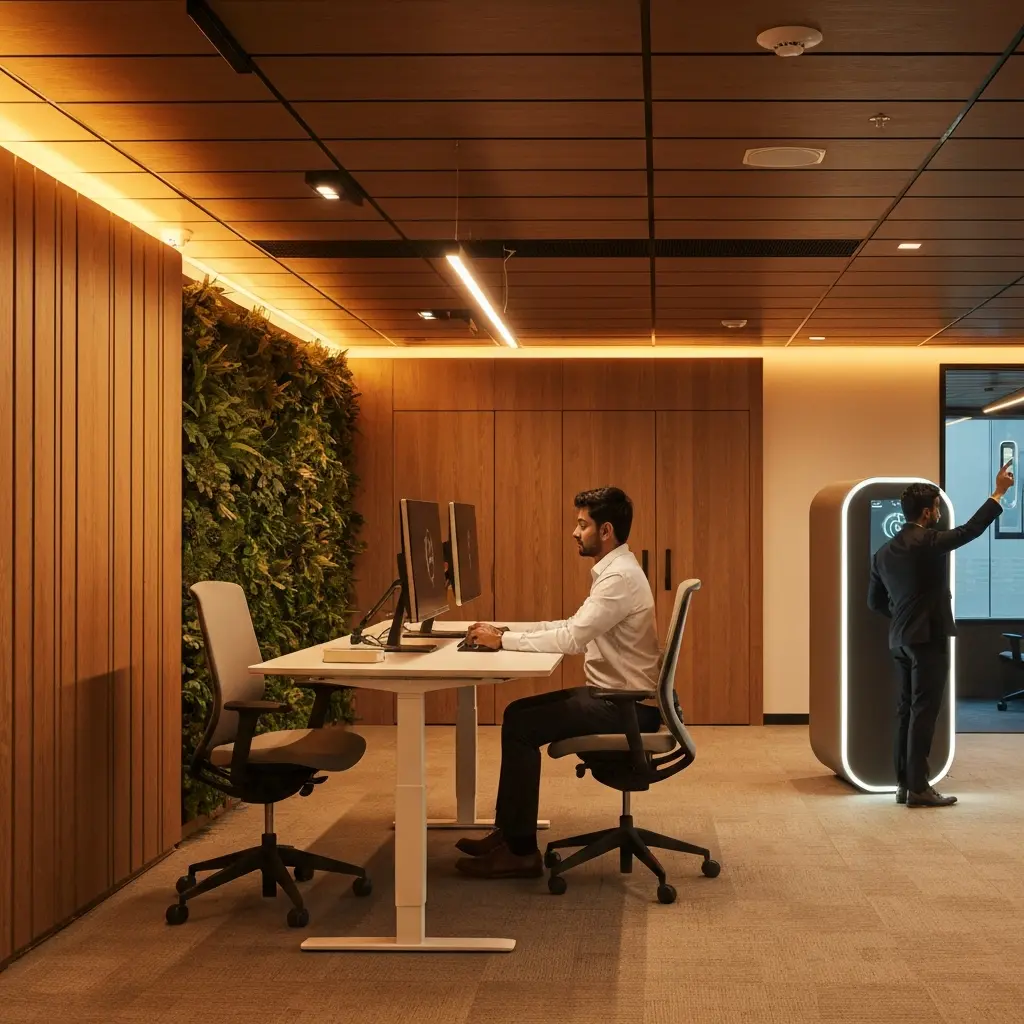
Concurrently, demand has intensely focused on utility. Surveys rank meeting rooms, phone booths, and collaborative zones as top requests, while luxury amenities have fallen in priority. The IT sector, now the leading flex space client at 38.2% market share, prioritises ‘utility-grade’ infrastructure—reliable, high-speed connectivity and power—over aesthetic frills. This aligns perfectly with the needs of Indian tech startups and SME teams who require functional, professional environments to be productive.
| Cost Factor | Traditional Chennai Office (Annual Estimate) | Modern Flexible Solution (Annual Estimate) |
|---|---|---|
| Rent & Maintenance | ₹ 8-15 Lakhs + 3-6 month deposit | Included in membership (₹ ~2.5-6 Lakhs for a team) |
| IT Infrastructure | Separate contracts for ISP, security, software (₹ 1-3 Lakhs) | Often bundled as ‘Digital Worksuite’ |
| Amenities Management | In-house staff or outsourced contracts | Fully managed by operator |
| Scalability Cost | High (lease renegotiation, fit-out) | Low (add/reduce memberships monthly) |
Building Resilience Through Ancillary Revenue and Subscriptions
For operators, developing ancillary revenue streams—income beyond core membership fees—is a key profitability lever, now targeting 15-25% of total income. This includes services like virtual office addresses, mail handling, GST registration support, dedicated admin staff, and event hosting. For your business, this represents an opportunity. Instead of building these capabilities in-house, you can access them on-demand from your workspace provider, converting fixed HR and admin costs into variable, operational expenses.
Furthermore, the subscription economy is permeating the sector. Major global hotel chains now offer coworking memberships integrated with their loyalty programmes, allowing business travellers to work professionally anywhere. This model points to a future where access, not ownership, of a global professional network is standard. For an Indian business looking to establish a presence in multiple cities without the legal and financial overhead, this network effect through a single local provider like Crizone is invaluable.
Manager Insight: “The goal is to turn your workspace from a cost centre into a growth partner. The right provider should offer services that directly support client meetings, team recruitment, and day-to-day operations, freeing you to focus on strategy.”
The 2026 Outlook for India’s Workspace Market
The Indian flexible workspace market in 2026 will reflect these global shifts with local characteristics. We will see a stronger emphasis on bundled tech solutions within membership plans. Operators will increasingly pursue management contracts over leases, leading to more spaces in Grade-A buildings without the associated risk premium. Expect ‘Price Lock’ annual plans to become commonplace, offering cost certainty. The focus will remain ruthlessly on core productivity amenities—high-quality meeting rooms and reliable infrastructure—catering to the dominant IT/tech sector. While the UK’s specific ‘Business Rates Cliff’ may not apply, Indian operators and their clients will remain vigilant about municipal tax changes and GST compliance, making the financial simplicity of an all-inclusive model even more attractive.
Key Takeaways
- Seek Cost Certainty: Prioritise workspace providers offering transparent, all-inclusive pricing or ‘Price Lock’ annual plans to hedge against inflation.
- Value Digital Bundles: Ensure your chosen plan includes robust IT infrastructure and essential business software, as these costs are rising globally.
- Prioritise Utility Over Luxury: Focus on spaces that excel in core offerings: reliable internet, professional meeting rooms, and quiet phone booths.
- Leverage Ancillary Services: Use your provider’s add-on services (virtual office, admin support) to replace fixed in-house costs with flexible, on-demand solutions.
- Think Network, Not Just Address: Consider providers with asset-light, multi-location models or alliances, facilitating easier expansion across India.
Conclusion
The 2026 pivot in flexible workspaces is fundamentally about resilience and strategic growth. It moves the model from simple space rental to being an integrated operating system for your business. By understanding the forces of SaaS inflation, the shift to asset-light operations, and the critical nature of core amenities, Indian business leaders can make empowered decisions. This isn’t just about finding a desk; it’s about choosing a scalable, efficient platform that absorbs operational volatility and lets you concentrate on growth. For businesses in Chennai seeking this precise, calmly efficient partnership, Crizone Business Centre provides the infrastructure, stability, and strategic support to navigate this new landscape and thrive.
Continue your workspace search
Explore the most relevant Crizone pages next
If this article is part of your Chennai workspace research, these pages help you move from reading into comparing live plans, locations, and fit.
Explore coworking plans in Chennai
Compare day passes, dedicated desks, private offices, meeting rooms, and virtual office options from one commercial hub page.
Book a day pass in Chennai
Best fit if you need occasional workspace access, a short productive break from home, or a flexible desk for a single day.
Compare dedicated desk options
A stronger fit for regular monthly use when you want a fixed seat, better routine, and predictable workspace costs.