· Business Growth & Workspace · 7 min read
The Elastic Portfolio: How Indian Businesses Scale with Satellite Hubs
Explore how India's top firms use the Elastic Portfolio model, blending HQ power with suburban hubs, to cut costs, retain talent, and drive growth. Learn to adapt this strategy for your business.
TL;DR: Top Indian corporations are building an Elastic Portfolio of workspaces to win the talent war. By combining a central HQ with flexible suburban satellite hubs, they slash real estate costs by 25% and boost retention, as 55% of employees value the reduced commute. This is the future of strategic growth.
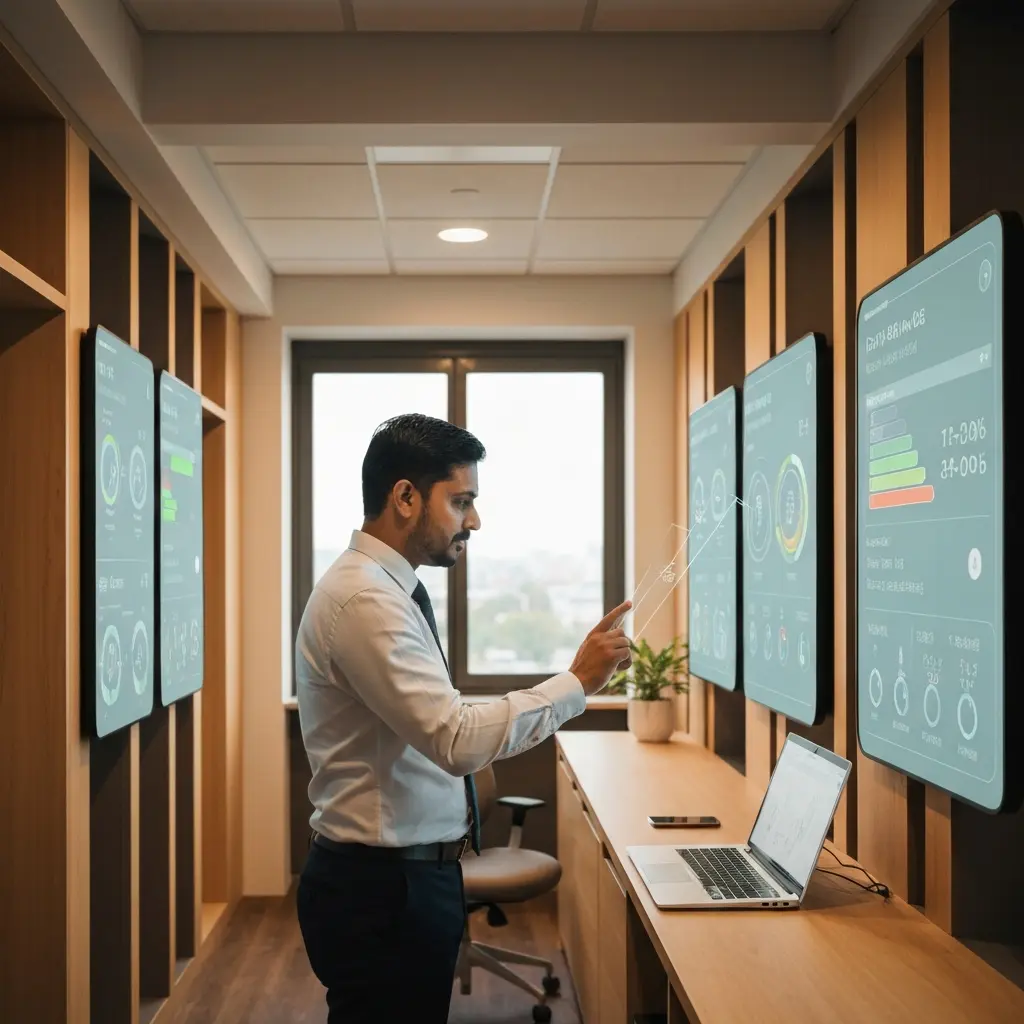
The modern Indian business leader faces a strategic dilemma. On one hand, soaring commercial rents in city centres and punishing traffic on corridors like Chennai’s OMR threaten profitability. On the other, the demand for hybrid work is no longer negotiable; top talent now considers it a fundamental right. The binary choice between a costly central office or a fragmented remote team is obsolete. The winning strategy, as evidenced by global leaders and now being rapidly adopted in India, is the intelligent diversification of workspace assets. This forward-looking model, which creates a resilient, responsive, and growth-enabling infrastructure, is the core of the modern Elastic Portfolio.
What is an Elastic Portfolio?
An Elastic Portfolio is a strategic real estate framework where a company’s workspace is not a single, fixed asset but a dynamic, blended portfolio. It typically combines a central headquarters (the anchor) with a network of flexible, high-performance satellite hubs in suburban or residential clusters. This model prioritises adaptability, employee proximity, and financial efficiency, allowing businesses to scale up or down seamlessly based on project needs, team locations, and market conditions. In 2026, it represents the evolution from viewing office space as a cost centre to treating it as a core component of talent strategy and operational agility.
From Cost Centre to Growth Engine: The Financial Imperative
The most immediate benefit of an Elastic Portfolio is its dramatic impact on the bottom line. For an Indian SME or startup, committing to a traditional 5-10 year lease in a Grade-A building locks in massive fixed costs, from security deposits running into lakhs to inflexible maintenance charges. In contrast, a flexible portfolio converts this capital expenditure into a variable operational cost.
Large corporations report an average of 25% savings on total real estate costs by adopting flexible terms. For an Indian business, this translates directly into freed-up capital for R&D, marketing, or hiring key talent. The savings aren’t just from rent; they extend to utilities, pantry supplies, and administrative overhead, as these are bundled into a single, predictable membership fee at a managed business centre.
| Cost Component | Traditional Chennai Office (10-yr lease) | Crizone Flexible Portfolio |
|---|---|---|
| Monthly Rent/Commitment | ₹ 5-10 Lakhs (fixed) | From ₹ 25,000 per seat (scalable) |
| Security Deposit | 6-12 months rent (₹ 30L - ₹ 1.2 Cr locked) | Typically 1-month deposit |
| Maintenance & Utilities | Separate monthly charges + DG/AC costs | Almost always inclusive |
| Furniture & Tech Fit-Out | High upfront capital expenditure (₹ 10-20 Lakhs+) | Professionally managed and included |
| Contract Flexibility | Rigid, with heavy exit penalties | Monthly or quarterly terms, easy to scale |
Crizone Pro Tip: Model your workspace cost as a percentage of revenue. An elastic model keeps this ratio low and stable, ensuring your burn rate is always aligned with growth, not weighed down by fixed overhead.
Winning the Talent War: The 15-Minute Commute Mandate
The second pillar of the Elastic Portfolio strategy is its power as a talent retention and acquisition tool. In 2026, 65% of new enterprise flex space memberships were chosen specifically for locations within a 15-minute commute of employee homes. In an Indian metro like Chennai, skipping the OMR or GST Road traffic isn’t a perk; it’s a game-changer for employee well-being and daily productivity.
This isn’t theoretical. Data shows 55% of enterprise employees would consider resigning if access to a convenient satellite hub was revoked. For an Indian founder, this means your best developer in Porur or your top sales manager in Velachery is more likely to stay—and perform—if they aren’t facing a grueling two-hour daily commute. The hub becomes a “third workplace” that offers the professionalism of an office without the commute penalty, directly countering the dreaded “Talent Retention Cliff.” This shift is so pronounced that 45% of such memberships are now fully employer-sponsored, cementing flex space as a core corporate utility, not just a freelancer’s tool.
Building for Agility: Privacy, ESG, and the Elastic Hub
The third theme reshaping workspaces is the demand for purpose-built, adaptable infrastructure. Contrary to the early image of coworking, the 2026 demand is for privacy and focus. Demand for private office suites and acoustic pods within flex spaces outpaces open-plan hot-desking by 3:1. Indian teams need spaces for confidential client calls, focused deep work, and secure data handling—all of which are standard in enterprise-grade hubs like Crizone.
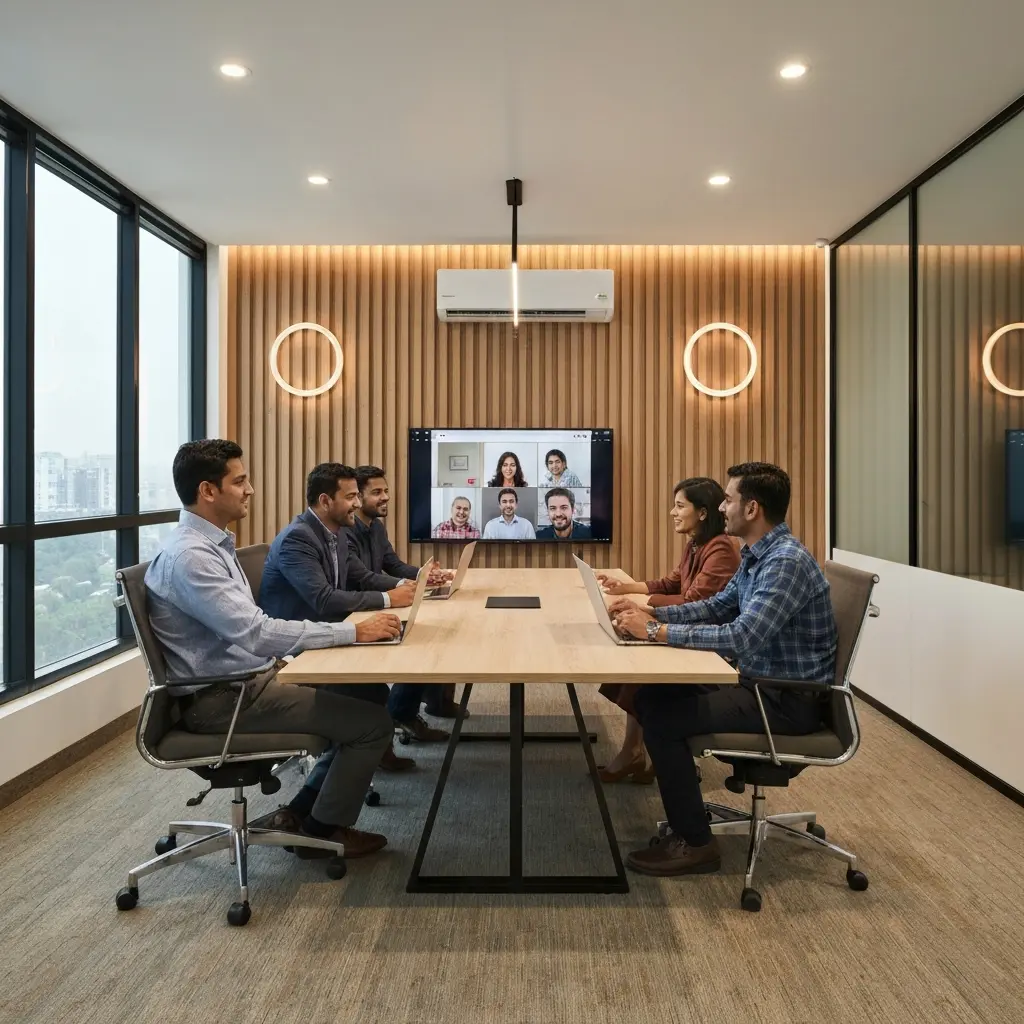
Furthermore, the design ethos is “immediate adaptability.” Modern meeting rooms are no longer just four walls and a table; 95% are equipped for seamless 4K virtual collaboration, connecting distributed teams across Chennai, Bengaluru, and globally as if they were in the same room. This aligns with a growing corporate emphasis on ESG (Environmental, Social, and Governance) goals. Enterprise flex environments report a 30% lower carbon footprint per employee than traditional, often under-utilised, corporate campuses, aiding Indian companies in meeting their Scope 3 emissions targets.
Crizone Manager Insight: “Our clients value the ability to host a high-stakes board meeting in a soundproof suite one day and a casual team brainstorming in a breakout lounge the next. The infrastructure adapts to the work mode, not the other way around. This is crucial during India’s festive season when teams are distributed but collaboration must continue.”
Is an Elastic Portfolio Right for Your Indian Business?
This strategic shift isn’t exclusive to Fortune 500 companies. For an Indian SME, startup, or a corporate branch manager, the question is one of timing and scale. The model is perfectly suited for:
- Scaling Startups: Needing to hire talent where they live, not force them to relocate.
- Entering New Markets: A brand can establish a professional presence in, say, Coimbatore or Hyderabad with a single private office, without the liability of a full lease.
- Project-Based Teams: Quickly assembling experts from across the city for a fixed duration in a fully serviced hub.
- Corporate India’s Hybrid Mandate: Providing teams with a dignified, productive alternative to working from home or a draining commute.
The divergence in occupancy rates is telling: while traditional offices globally linger near 50% occupancy, high-quality suburban flex spaces are seeing 25% year-on-year growth. The market has voted with its presence.
The 2026 Outlook for India’s Workspace Landscape
As we move through 2026, the adoption of the Elastic Portfolio model in India will accelerate. We predict a surge in demand for premium, enterprise-grade flex spaces in suburban hubs and tier-2 cities, closely tied to residential and metro connectivity. The concept of a “Head Office” will evolve to mean a strategic and cultural centre, while the daily work will happen in a distributed network of high-performance hubs. Cost optimisation will remain key, but the primary driver will be talent strategy. Businesses that fail to offer this flexibility will find themselves at a severe disadvantage in the war for skilled professionals, especially in tech and knowledge sectors. As noted by JLL in their 2026 India outlook, flex space is now “core infrastructure,” and its integration into corporate real estate strategy is mandatory for competitive resilience.
Key Takeaways for Indian Business Leaders
- Financial Agility is Non-Negotiable: Convert fixed real estate costs into variable operational expenditure to protect your runway and fund growth.
- Talent Lives in Neighbourhoods: Place your team’s commute at the heart of your location strategy to boost retention, well-being, and daily output.
- Privacy Enables Professionalism: Seek flex solutions that offer private, secure suites and meeting rooms—the open-plan frenzy is over.
- Infrastructure Must be Instant: Your workspace technology should enable seamless collaboration across distances from day one.
- Start Small, Scale Strategically: You don’t need to redesign your entire operation overnight. Begin with a pilot team or project in a flexible hub to experience the model’s benefits.
The era of the monolithic corporate office is giving way to a more intelligent, human-centric, and strategically elastic model. This isn’t merely a trend; it’s a fundamental rewiring of how businesses organise space to empower people and fuel growth. For forward-thinking companies in Chennai and across India, the opportunity is to build a workspace portfolio that is as dynamic and ambitious as their business plan.
This precise blend of central authority and local agility is what defines a modern workspace strategy. At Crizone Business Centre, we provide the infrastructure, professionalism, and calm efficiency that turns this strategic vision into a daily reality for growing businesses across Chennai.
Continue your workspace search
Explore the most relevant Crizone pages next
If this article is part of your Chennai workspace research, these pages help you move from reading into comparing live plans, locations, and fit.
Explore coworking plans in Chennai
Compare day passes, dedicated desks, private offices, meeting rooms, and virtual office options from one commercial hub page.
Book a day pass in Chennai
Best fit if you need occasional workspace access, a short productive break from home, or a flexible desk for a single day.
Compare dedicated desk options
A stronger fit for regular monthly use when you want a fixed seat, better routine, and predictable workspace costs.