· Coworking & Productivity · 5 min read
Balancing Calls and Confidentiality in Chennai Coworking Spaces
A practical guide for founders and freelancers on handling sensitive communication and client meetings in Chennai's shared workspaces while maintaining privacy and etiquette.
Successfully navigating calls and meetings in a shared workspace requires a deliberate strategy to protect your focus, your client’s confidentiality, and the peace of the community. It’s about creating a professional workflow that respects the shared nature of the environment.
Why Calling Etiquette Is Critical in Chennai
Chennai’s coworking scene, especially in bustling hubs like Guindy and Adyar, is vibrant but can be dense. The most common complaint leading professionals to switch spaces is disruptive noise from loud sales calls and impromptu managerial huddles in open areas. For the city’s significant SaaS and IT services sector, where NDAs are standard, discussing sensitive client data at an open desk isn’t just unprofessional—it can be a contractual violation. A disciplined approach to communication is therefore non-negotiable.
The Professional’s Playbook for Calls and Meetings
1. The Five-Minute Desk Limit
Adopt a simple, effective rule: any call expected to last longer than five minutes, or that involves high-energy activities like pitching or negotiation, must move to a private space. This preserves the ‘focus zone’ for your neighbours. Keeping personal or logistical chats brief and quiet at your desk is fine, but the moment a call transitions to business, assess its privacy and noise impact.
2. Know Your Space: Phone Booth vs. Meeting Room
Not all private spaces are equal. Use them strategically:
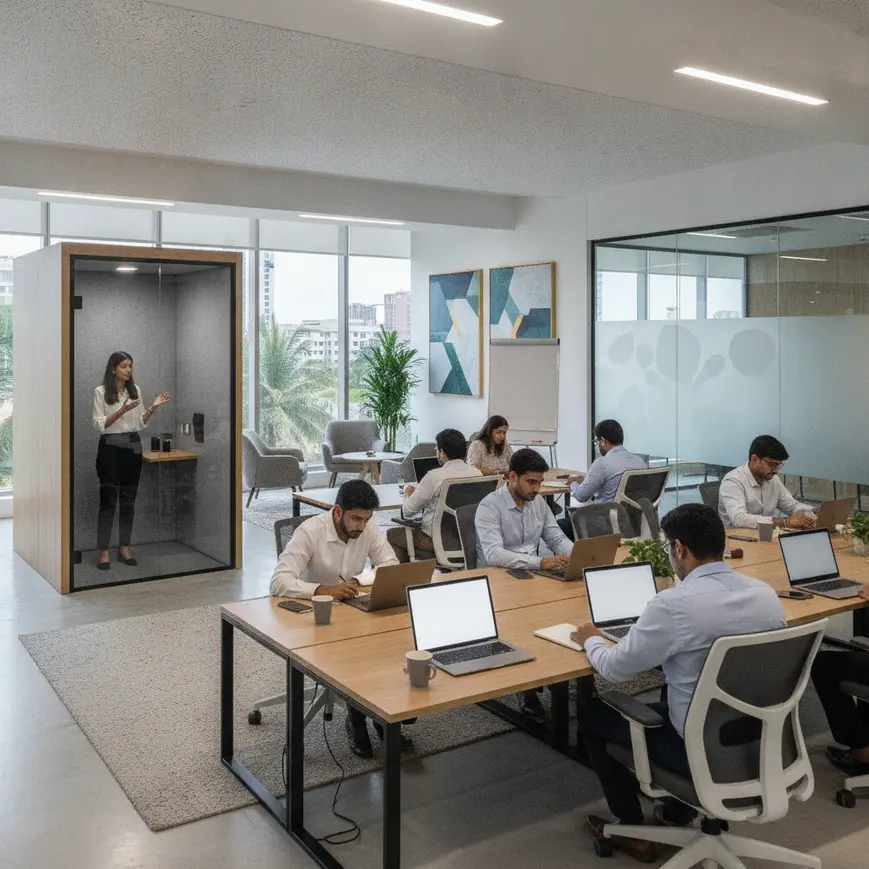
- Phone Booths: Perfect for confidential one-on-one calls, quick client check-ins, or interviews where you only need audio privacy and a quiet background. They are designed for efficiency.
- Meeting Rooms: Book these for client presentations, team Zoom calls, collaborative brainstorming, or any discussion where visual aids (like sharing your screen) are involved. Booking a meeting room for a critical 30-minute video call is a professional investment that guarantees zero visual or audio distractions for you or your client.
3. Master the Art of Non-Verbal Cues
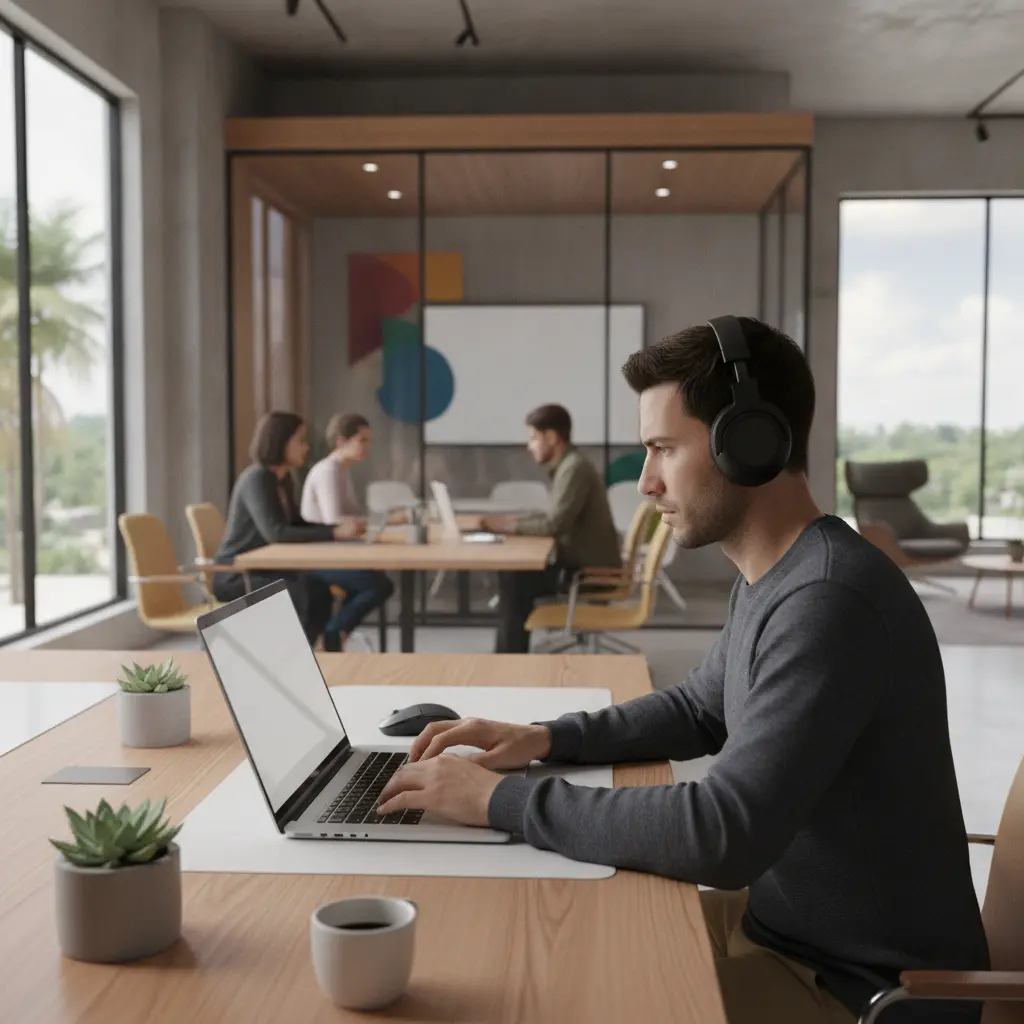
Your gear and posture send signals. A quality pair of closed-back, noise-cancelling headphones is a dual-purpose tool: it blocks ambient chatter and acts as a universal ‘do not disturb’ sign for casual social interruptions. Combine this with a focused posture at your monitor to clearly communicate you are in a deep-work session.
4. Implement Visual Privacy Protocols
In high-density layouts, ‘visual hacking’—where someone nearby can see your screen—is a real risk. This is critical when handling financial data, contract details, or client dashboards. A simple, cost-effective solution is a physical privacy screen filter for your laptop. It blacks out the screen from side angles, allowing only the person directly in front to see the content. It’s a basic but essential layer of security in a shared setting.
5. Time Your Deep Work and Calls Strategically
Sync your schedule with the rhythm of your space and city. Many Chennai founders schedule their most sensitive, focused work during the mid-day lull (roughly 11 AM to 3 PM), avoiding the natural distraction waves that occur as members arrive during morning traffic or leave in the evening on corridors like OMR and Anna Salai. If you work with international clients in US or UK time zones, be especially mindful during evening hours in India. Your peak calling time may be the local members’ prime deep-work period. During these ‘shift’ hours, be extra vigilant about using phone booths or pods.
6. The ‘Non-Desk’ Rule for Breaks and Food
To maintain a professional atmosphere, keep food and casual loud conversations away from the work desks. Enjoy your lunch, coffee, or a chat with a fellow member in the pantry or designated breakout areas. This simple etiquette, which we can call the ‘Tiffin Rule’, keeps workspaces clean, odour-free, and mentally associated with productivity, not lunch breaks.
Chennai-Specific Considerations
The city’s diverse commercial zones offer different environments. Spaces in industrial areas like Ambattur often cultivate a more heads-down, ‘get-work-done’ atmosphere compared to some of the more socially vibrant hubs in central Chennai. However, the need for strict calling etiquette remains universal. Regardless of location, the core challenge is balancing energy and privacy.
Commute patterns also matter. If your space is easily accessible, you might see more foot traffic and transient noise. Planning your critical calls outside peak arrival/departure windows can lead to a quieter, more predictable environment.
Creating Your Personal Protocol
Start by auditing your weekly communication:
- Categorise: List your regular calls (client updates, team syncs, sales pitches).
- Assign Spaces: Match each call type to the appropriate zone (desk, phone booth, meeting room).
- Schedule: Block time in your calendar not just for the call, but for booking the necessary room if required.
- Equip: Invest in the tools—privacy screen, good headphones—that support this protocol.
This system transforms reactive noise management into a proactive professional habit.
Finding the Right Space for Your Needs
When evaluating a coworking space in Chennai, look beyond the price and aesthetics. Test the acoustics of the open area during a busy hour. Ask about the member-to-phone-booth and member-to-meeting-room ratios. A space designed for professionals will have sufficient private enclaves to support confidential work. Observe the existing culture: are members respectful with their calls?
At Crizone, for instance, the layout is designed with these very challenges in mind. Dedicated phone booths and a variety of bookable meeting rooms are available to ensure that when you need to make that important pitch or discuss sensitive details, you can do so without compromise, while the open-plan areas remain conducive for quiet, focused work. The key is choosing a space whose infrastructure and community culture actively support the professional workflow you need to build.
Ultimately, thriving in a coworking environment is about shared responsibility. By adopting these strategies, you not only protect your own productivity and professionalism but also contribute to a more respectful, focused, and high-performing community for everyone.
Continue your workspace search
Explore the most relevant Crizone pages next
If this article is part of your Chennai workspace research, these pages help you move from reading into comparing live plans, locations, and fit.
Explore coworking plans in Chennai
Compare day passes, dedicated desks, private offices, meeting rooms, and virtual office options from one commercial hub page.
See private offices for growing teams
Useful when your team needs privacy, more focused calls, a stronger client-facing setup, or room to scale beyond shared seating.
Find meeting rooms in Chennai
Use this when the article intent leans toward client meetings, workshops, presentations, interviews, or short collaborative sessions.
- Coworking Etiquette
- Workplace Privacy
- Chennai Business
- Freelancer Tips