· Business Growth & Workspace · 6 min read
Workspace ROI 2026: Why Wellness Design Boosts Indian Business
Beyond aesthetics, workspace design in 2026 drives measurable financial returns. Learn why fatigue-responsive environments reduce absenteeism and boost productivity for Indian entrepreneurs.
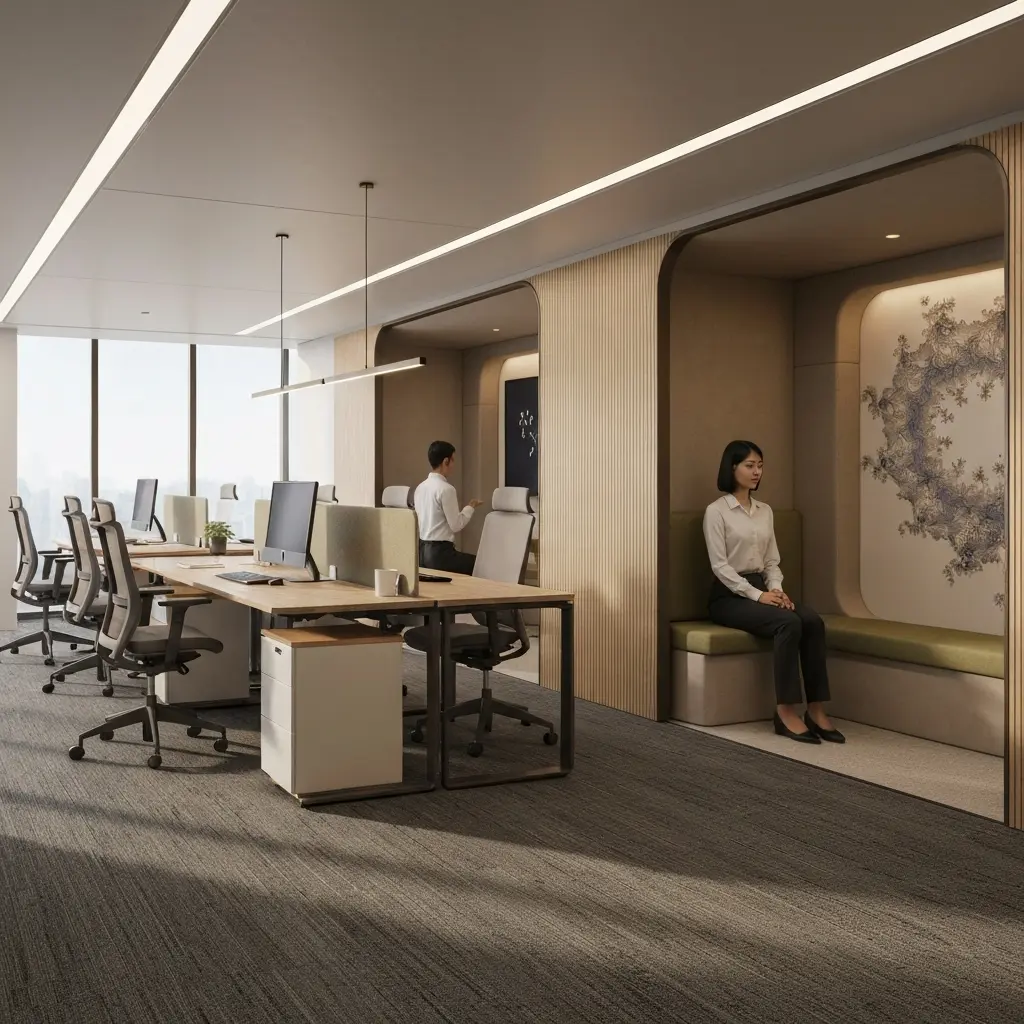
TL;DR: The 2026 workspace is a strategic asset. Moving beyond superficial perks, fatigue-responsive environments with clinical-grade recovery zones and bio-based materials deliver a tangible wellness dividend. For Indian businesses, this translates to reduced absenteeism, heightened focus, and significant cost savings, making wellness design ROI a core growth metric.
Introduction: The New Workplace Imperative
Indian entrepreneurs and SME leaders face a dual challenge: escalating operational costs and mounting workforce burnout. The traditional office lease in Chennai, with its fixed costs and rigid setup, is increasingly misaligned with the demands of a dynamic, hybrid-first economy. As talent retention becomes paramount, the workspace itself emerges as a critical lever for growth. The emerging 2026 paradigm shifts decisively from mere amenity provision to measurable health outcomes, where the wellness design ROI 2026 is calculated not in aesthetics but in reduced absenteeism, enhanced productivity, and direct financial savings. This evolution presents a strategic opportunity for businesses to invest in environments that actively support their teams’ wellbeing and, consequently, their bottom line.
What is Wellness Design ROI 2026?
It is the measurable financial and operational return generated by investing in a workspace designed with intentional health outcomes. This goes beyond basic ergonomics to encompass fatigue-responsive zones, bio-based materials, and data-proven elements that reduce physical and mental strain. The return is quantified through metrics like decreased absenteeism, higher job satisfaction, and lower long-term costs associated with employee health issues and furniture replacement.
The Financial Case: From Cost to Strategic Investment
For an Indian SME, every rupee saved on avoidable costs is capital freed for growth. Traditional office setups incur significant, often hidden, expenses: high rents for underutilised space, costly furniture replacements, and the financial drain of employee sick days. The Global Wellness Institute data indicates organisations with wellness-centric design see a 32% decrease in absenteeism. For a 10-person team, this could mean saving over ₹4 lakh annually in lost productivity and replacement costs. Furthermore, every dollar (or rupee) spent on such design saves approximately ₹2.70 in absence-related costs. This turns workspace investment from a fixed overhead into a growth-enabling strategy.
Manager Insight: “View your workspace budget not as an expense, but as a talent retention and productivity fund. The savings from reduced burnout and absenteeism often outweigh the initial investment within a single financial year.”
| Cost Factor | Traditional Chennai Office (Annual Estimate) | Flexible, Wellness-Oriented Solution (Annual Estimate) |
|---|---|---|
| Base Rent & Maintenance | ₹8-12 Lakhs (for 1000 sq ft, OMR/ECR) | ₹3-6 Lakhs (all-inclusive premium membership) |
| Furniture Capital Expenditure | ₹2-4 Lakhs (initial setup + replacements) | Minimal to ₹80,000 (access to modular, high-performance assets) |
| Absenteeism & Burnout Costs | ~₹4 Lakhs (for a 10-person team, productivity loss) | Potential 32% reduction (~₹1.3 Lakhs savings) |
| Total Comparative Impact | High fixed cost, high hidden attrition cost | Predictable cost, strategic wellness dividend |
Is Your Current Space Fatigue-Responsive?
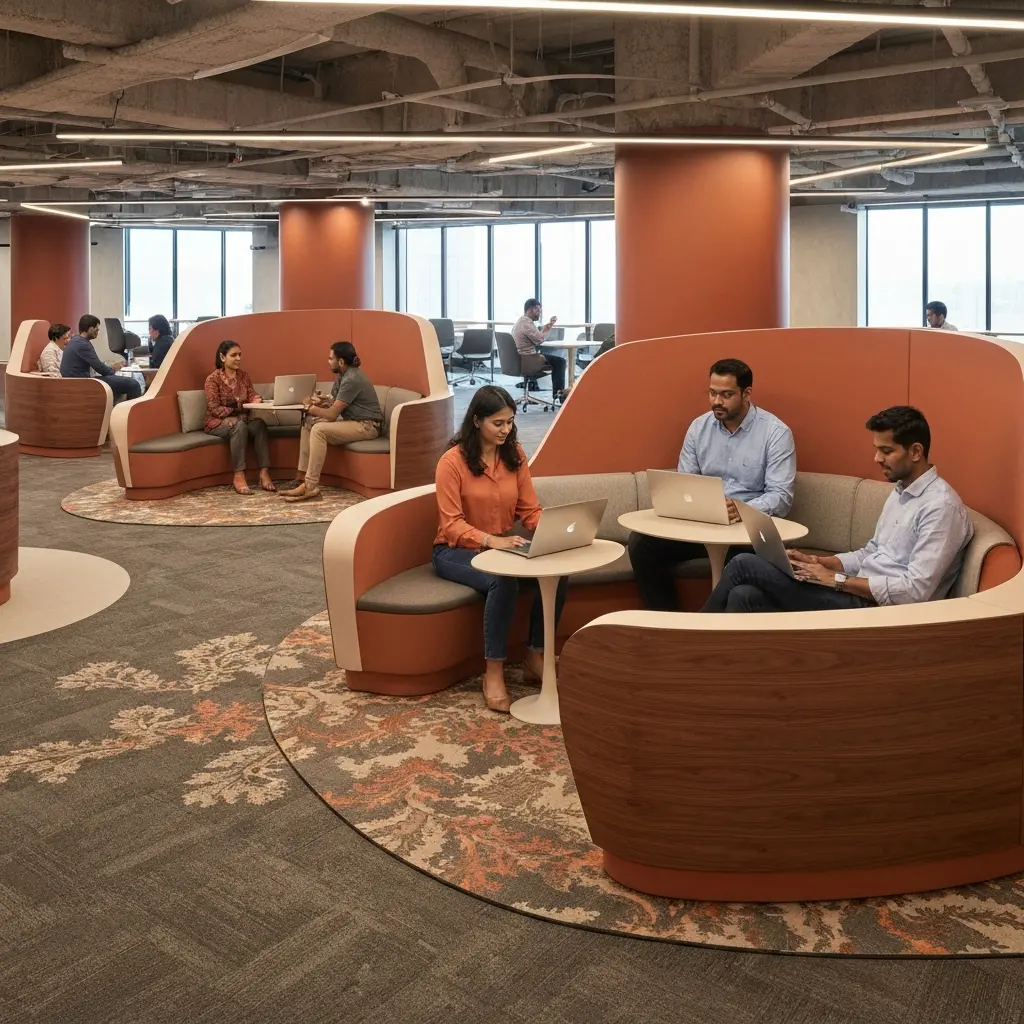
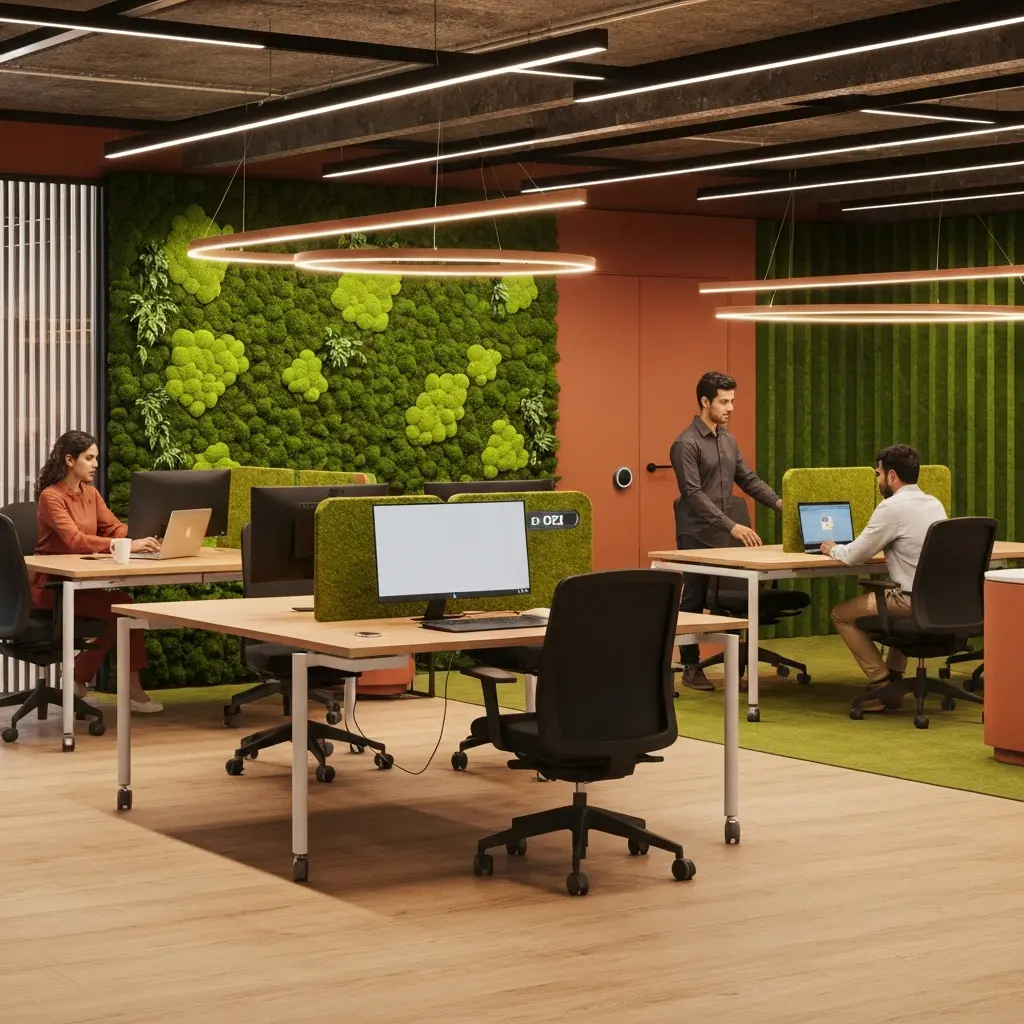
Fatigue is the silent tax on Indian productivity, compounded by urban commutes like OMR traffic and the humid climate. A fatigue-responsive workspace proactively counters this through design. It integrates dedicated recovery zones—such as quiet pods for post-commute respite—which top operators are adopting in their ‘Mini-Campus’ models. It employs advanced dynamic seating, proven to improve comfort by nearly 30% during long focus sessions crucial for deep work. The biophilic innovation has evolved to ‘Fractal Design’; specific nature-based patterns can reduce stress by up to 60%, offering a mental reset without leaving the office. For a freelancer or founder, this means sustained afternoon energy without the post-lunch slump, directly translating to more billable hours or productive strategy sessions.
[Image of a comparative diagram showing a traditional office floorplan vs. a fatigue-responsive layout] Caption: A traditional linear layout versus a 2026 fatigue-responsive design integrating zones for focus, collaboration, and recovery.
Crizone Pro Tip: “Evaluate your day. If you consistently experience a 3 PM energy crash, your environment is likely not fatigue-responsive. Look for spaces offering varied zones, ergonomic variety, and visual relief from screens.”
The 2026 Materials & Economics: Smart, Sustainable Assets
The 2026 workspace is also fiscally smarter. The ‘Circular Economy’ standard drives modular furniture, which can be reconfigured on-site, potentially reducing furniture CapEx by up to 80% over its lifecycle—a boon for startups wary of large upfront investments. Material innovation pivots to petroleum-free solutions like binders from brown algae and upholstery from rice husk waste, aligning with sustainable values and often offering better durability. This shift means businesses access higher-quality, healthier assets without the burden of ownership, and the workspace operator bears the responsibility for lifecycle management. This model, as reflected in NASSCOM’s future workspace reports, allows Indian businesses to stay agile and cost-effective.
The 2026 Outlook for Indian Workspaces
By 2026, we predict a clear bifurcation in the Indian market. Generic flex spaces will compete on price, while premium operators like Crizone will compete on documented wellness outcomes. Corporate branches and SMEs will increasingly mandate ergonomic seating—estimated for 65% of setups—to mitigate rising costs of musculoskeletal disorders. Wellness design ROI will become a standard clause in workspace procurement audits, with operators providing data on occupant stress reduction and absenteeism rates. The workspace will be less a rented location and more a managed health and productivity platform.
Key Takeaways for Indian Business Leaders
- Quantify the Hidden Cost: Calculate not just rent, but the annual cost of absenteeism and burnout in your team. Wellness design directly reduces this.
- Demand Performance Data: When evaluating a workspace, ask for specifics on ergonomic seating standards, recovery zone availability, and biophilic design integration.
- Think Modular & Circular: Opt for furniture solutions that can adapt over time, saving significant capital over a 5-year period.
- Prioritise Post-Compute Recovery: For teams facing Chennai traffic, a workspace with dedicated quiet zones for arrival can reset the day and protect productivity.
- Link Design to Talent Strategy: A fatigue-responsive environment is a powerful signal to potential hires about your company’s commitment to their wellbeing, aiding retention.
Conclusion: The Workspace as Your Growth Partner
The evolution from a static office to a dynamic, health-positive environment is no longer a luxury; it is a strategic necessity for growth-oriented businesses in India. The wellness design ROI 2026 framework provides the metrics to make this shift a calculated business decision, not just an aesthetic one. It turns the challenge of hybrid work and urban fatigue into an opportunity for enhanced focus, resilience, and output.
For founders, freelancers, and managers in Chennai seeking this precise advantage, Crizone Business Centre is designed as your growth partner, integrating these 2026 principles to provide a calmly efficient environment where your business—and your team—can thrive.
Continue your workspace search
Explore the most relevant Crizone pages next
If this article is part of your Chennai workspace research, these pages help you move from reading into comparing live plans, locations, and fit.
Explore coworking plans in Chennai
Compare day passes, dedicated desks, private offices, meeting rooms, and virtual office options from one commercial hub page.
Book a day pass in Chennai
Best fit if you need occasional workspace access, a short productive break from home, or a flexible desk for a single day.
Compare dedicated desk options
A stronger fit for regular monthly use when you want a fixed seat, better routine, and predictable workspace costs.
- Coworking Trends
- Workspace Design
- Business Productivity